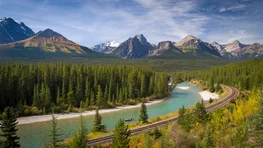
Vancouver and Banff Extended Getaway
Calgary→Banff→Kamloops→Vancouver
Available: April – October
Length: 6 days / 5 nights
Train type: Rocky Mountaineer
Time on train: 2 days
Loading...
First Passage to the West is Rocky Mountaineer’s historic rail journey that runs between Vancouver and Banff or Lake Louise, giving passengers a two-day luxury travel experience through some of the most iconic landscapes in Canada. The Vancouver to Banff train route follows the original Canadian Pacific Railway line completed in the 1880s, carrying travellers from the Pacific coast to the Canadian Rockies with an overnight stop in Kamloops. The Rocky Mountaineer Vancouver to Banff trip passes valleys, farmland, mountain lakes, and dense forests, while crossing the Continental Divide and showcasing landmarks such as Kicking Horse Canyon, the Spiral Tunnels, and the site of the last spike in 1885. The Rocky Mountaineer first passage to the west offers daylight-only travel, making every mile of scenery visible, with GoldLeaf service providing bi-level glass-dome coaches and a separate dining area, and SilverLeaf service offering oversized windows with meals served at the seat. Expect panoramic mountain views, gourmet three-course meals featuring regional ingredients, complimentary drinks including local wines, and engaging storytelling from onboard hosts throughout the scenic rail journey from Vancouver to Banff or Lake Louise.
Calgary→Banff→Kamloops→Vancouver
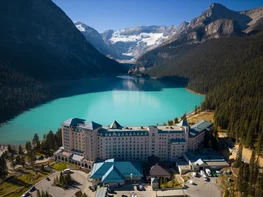
Calgary→Lake Louise→Kamloops→Vancouver
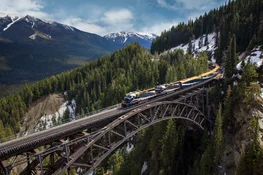
Banff→Kamloops→Vancouver
The First Passage to the West Route on the Rocky Mountaineer is a two-day train journey that follows the historic Canadian Pacific Railway line through the Canadian Rockies. The Rocky Mountaineer train route travels between Vancouver, British Columbia, and Banff, Alberta, offering passengers stunning views of snow-covered mountains, clear lakes, and thick forests. The train stops overnight in Kamloops, British Columbia, where travellers stay in hotel accommodations before continuing the train trip the following day.
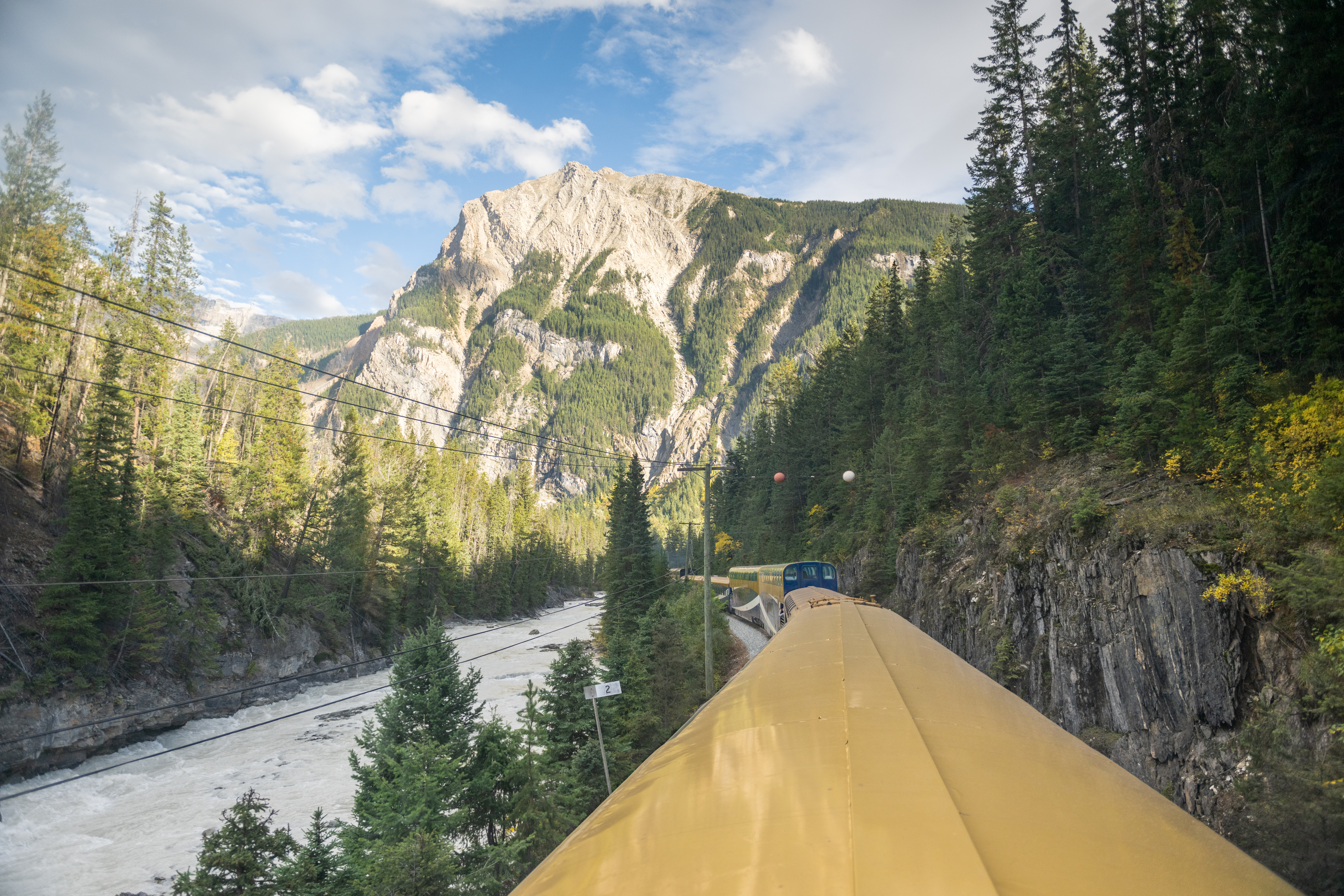
The First Passage to the West Route covers approximately 957 kilometres (591 miles) along the original path used by Canadian pioneers in the 1880s to connect eastern and western Canada. Passengers travel through the Fraser Canyon, pass Hell's Gate, follow the Thompson and South Thompson Rivers, and climb into the Rocky Mountains. The route includes iconic landmarks such as the Spiral Tunnels and Kicking Horse Pass, giving travellers unforgettable views of rugged mountain landscapes that have remained largely unchanged since the Canadian Pacific Railway was first built.
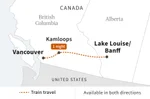
The itinerary for the Rocky Mountaineer First Passage to the West Train is listed below.
A Banff to Vancouver train itinerary for a scenic trip should include two full days of rail travel to fully enjoy the views along the Rocky Mountaineer Banff to Vancouver route. The Banff to Vancouver train travels through the Canadian Rockies, Thompson River Valley, and Fraser Canyon with one overnight stop in Kamloops, ensuring passengers see mountains, alpine lakes, and river gorges entirely during daylight hours. The scenic train from Vancouver to Banff follows the same route in reverse, providing the same two-day all-daylight experience for travellers heading east.
Complete Banff to Vancouver train itinerary packages range from three to five nights, depending on hotel stays and sightseeing preferences. A three-night package includes one night each in Vancouver, Kamloops, and Banff. The five-night option offers two nights in Vancouver and Banff, with one night in Kamloops. The two-day Rocky Mountaineer Banff to Vancouver rail portion stays the same regardless of the total package length. The schedule allows travellers to enjoy scenic landscapes at a relaxed pace, while exploring departure and arrival cities before and after the train journey.
The Rocky Mountaineer Train Ride from Vancouver to Calgary includes a two-day, one-night journey that passes through the Canadian Rockies. The Rocky Mountaineer Vancouver to Calgary route includes the train from Vancouver to Banff, an overnight stop in Kamloops, where passengers stay in a hotel before continuing their journey, and a drive from Banff to Calgary.
The Rocky Mountaineer train travels from Vancouver to Banff or Lake Louise, not directly to Calgary. Passengers complete the final leg to Calgary using additional transportation (shuttle, tour, or rental car). It’s not possible to take the train Vancouver to Calgary, though Rocky Mountaineer operates between Vancouver and Banff on select days from April through October, offering flexibility when planning a scenic rail experience. There is no Vancouver to Calgary train, but Rocky Mountaineer provides an all-inclusive service between Vancouver and Banff with meals, panoramic views, hotels, and transfers.
Stay longer at either end for deeper exploring
Because this route passes through such iconic landscapes, I always recommend adding an extra night on either end to explore at a relaxed pace. In Banff, that gives you more time for viewpoints, gondolas, and lakes, while Vancouver offers oceanfront, neighbourhood, and nature experiences before you board.
Kirsten McNabbProduct Specialist
Yes, trains from Vancouver to Banff stop in Kamloops. Rocky Mountaineer trains travelling on the First Passage to the West route make a scheduled overnight stop in Kamloops, which is the midpoint for all passengers on the two-day journey. The train moves from Vancouver through the lush Fraser Valley into the drier interior plateau and arrives in Kamloops in the evening. Hotel accommodations are provided for passengers during this overnight stop.
Passengers continue from Kamloops to Banff on the second day, enjoying scenic mountain landscapes during daylight hours. Travellers on the reverse route would go from Banff to Kamloops, have Kamloops as their overnight stop, and then continue from Kamloops to Vancouver. The train route serves passengers travelling from Vancouver to Kamloops to Lake Louise, too, since Lake Louise lies along the same corridor before reaching Banff. The planned itinerary ensures that travellers on Vancouver to Banff, Vancouver to Lake Louise, Banff to Vancouver, or Lake Louise to Vancouver trips have a well-paced, comfortable, and scenic rail experience.
Yes, the Rocky Mountaineer Train Route does pass through the Spiral Tunnels. The Rocky Mountaineer scenic train from Vancouver to Banff is the only train that travels through the historic Spiral Tunnels, a highlight of the First Passage to the West route. The train route provides passengers with sweeping views of the Canadian Rockies while highlighting the engineering marvel of the tunnels.
Seeing the Spiral Tunnels is a key scenic highlight of the Rocky Mountaineer journey. The tunnels form an elongated figure eight, turning inside Ogden and Cathedral mountains, creating a unique experience for travellers. The spiral tunnels Banff section give passengers a striking view of the tunnel entrance they just passed, offering a dramatic perspective of the landscape. The Rocky Mountaineer spiral tunnels train schedule depends on the day and direction, but the train will always pass through the tunnels during daylight hours, allowing passengers to fully enjoy the iconic feature of the Vancouver to Banff rail journey.
To book the Rocky Mountaineer Train First Passage to the West, follow the 11 steps listed below.
Book early to secure your preferred departure days
First Passage to the West runs only on select days from April to October, with Mondays and Fridays being the most common. I like to suggest booking early to ensure you get your preferred departure window — especially if you’re travelling in summer or upgrading to GoldLeaf.
Elléa MoreauManager of Product Operations
The best time to ride the Rocky Mountaineer from Vancouver to Banff is during the summer months of June through August for warm weather and optimal scenic viewing. The Rocky Mountaineer operates from April to October, providing a seven-month season for travellers to experience the legendary First Passage to the West route. Summer offers long daylight hours, plenty of sunshine, and comfortable temperatures, with alpine wildflowers blooming on mountain slopes and glacier-fed lakes reflecting crystal-clear turquoise waters. Extended daylight improves scenic viewing along the Vancouver to Banff journey.
Fall is another popular period, especially September through early October, when autumn colours create spectacular mountain vistas. Trees turn brilliant shades of yellow and orange, producing a vibrant panorama along the Rocky Mountaineer route. Shoulder seasons of late spring and early fall often combine favourable weather with excellent wildlife viewing opportunities and fewer crowds, making these periods the Best Time for Canadian Rockies travel for passengers seeking comfort and breathtaking scenery.
The best time to ride the Rocky Mountaineer from Vancouver to Banff is during the summer months of June through August for warm weather and optimal scenic viewing. The Rocky Mountaineer operates from April to October, providing a seven-month season for travellers to experience the legendary First Passage to the West route. Summer offers long daylight hours, plenty of sunshine, and comfortable temperatures, with alpine wildflowers blooming on mountain slopes and glacier-fed lakes reflecting crystal-clear turquoise waters. Extended daylight improves scenic viewing along the Vancouver to Banff journey.
Fall is another popular period, especially September through early October, when autumn colours create spectacular mountain vistas. Trees turn brilliant shades of yellow and orange, producing a vibrant panorama along the Rocky Mountaineer route. Shoulder seasons of late spring and early fall often combine favourable weather with excellent wildlife viewing opportunities and fewer crowds, making these periods the Best Time for Canadian Rockies travel for passengers seeking comfort and breathtaking scenery.
The Rocky Mountaineer Route Map helps in planning a Canada Rail Trip by providing travellers with a clear visual guide of the train’s path and key points of interest along each journey. The Rocky Mountaineer train route map shows the specific routes, including the First Passage to the West from Vancouver to Banff, Journey through the Clouds from Vancouver to Jasper, and Rainforest to the Gold Rush from Vancouver to Whistler to Jasper.
When on the train, Rocky Mountaineer includes a detailed route map in their onboard newspaper, which marks landmarks, mountain passes, rivers, and scenic viewpoints, and helps travellers visualize the journey and anticipate sights along the way.
The route map shows connections to Banff National Park and other major destinations, allowing travellers to choose the route that best fits their travel goals. Travellers plan expectations for scenic viewing opportunities and photographic moments that are unique to the Rocky Mountaineer experience. The detailed map provides advanced knowledge of vistas that are not visible by any other mode of transportation, making it an essential tool for organizing a memorable daylight-only rail trip through the Canadian Rockies.
The Rocky Mountaineer for a Trip from Vancouver to Banff costs starting at CAD 2,300 per person for the basic SilverLeaf service during the shoulder season month of April 2026. April is the least expensive time to travel on the Rocky Mountaineer train, starting at CAD 2,300 in 2026 for SilverLeaf Train Service, making it the most budget-friendly option for travellers seeking the Vancouver to Banff train ticket price. The cost for a trip from Vancouver to Banff depends on the service level and the time of year. September is the most expensive month to travel on the Rocky Mountaineer, with 2026 prices at CAD 2,800 per person for SilverLeaf and CAD 4,000 per person for GoldLeaf.
A first-class Rocky Mountaineer train ticket (GoldLeaf service) ranges from CAD 3,150 to CAD 4,000 per person, depending on travel dates. The upgrade to GoldLeaf Train Service is available for an upgrade fee of CAD 820 per person during April. Peak season months command premium pricing for the luxury glass-dome experience. The Rocky Mountaineer Prices include overnight accommodations in Kamloops and all gourmet meals during the two-day rail journey, with May, June, July, August, and October moderately priced, starting at CAD 2,800 in 2026 for SilverLeaf Train Service and CAD 3,800 for GoldLeaf Train Service.
GoldLeaf dining is ideal for food-focused travellers
If food is part of the experience for you, I recommend choosing GoldLeaf. The dedicated dining room and multi-course gourmet meals give it a true restaurant feel, complete with regional dishes and elegant service.
Kirsten McNabbProduct Specialist
Yes, the Rocky Mountaineer Vancouver to Banff price is worth the cost for travellers seeking a luxurious and scenic rail experience through the Canadian Rockies. The Vancouver to Banff train price includes onboard meals, beverages, and overnight accommodations in Kamloops, providing a complete and hassle-free travel package.
The value of the Rocky Mountaineer Vancouver to Banff price lies in the combination of unforgettable mountain scenery, all-inclusive onboard service, and a completely stress-free travel experience. GoldLeaf cabins feature panoramic glass ceilings for unmatched views. The train company handles luggage, transferring it to the hotels between Vancouver and Banff, so passengers can fully enjoy iconic sights (Fraser Canyon, Spiral Tunnels, and Banff National Park).
The inclusions in the Rocky Mountaineer First Passage to the West package are listed below.
The Rocky Mountaineer First Passage to the West is a shorter journey that follows a historic rail route between Vancouver and Banff, compared to the Rainforest to Gold Rush route, which features a longer wilderness adventure through varied landscapes. The Rocky Mountaineer First Passage to the West runs for two days from Vancouver to Banff or Lake Louise with one overnight stop in Kamloops, showcasing iconic highlights (Spiral Tunnels, Fraser Canyon, and snow-capped Rocky Mountain peaks). The Rainforest to Gold Rush route spans three days from Vancouver to Jasper with overnight stops in Whistler and Quesnel, passing through sparkling lakes, coastal rainforests, semi-arid landscapes, and remote northern wilderness.
The Rocky Mountaineer First Passage to the West centres on dramatic river valleys, engineering marvels, and the most famous mountain views in the Canadian Rockies. The Rainforest to Gold Rush route highlights Whistler’s resort atmosphere, unique geological formations, the history of the Gold Rush in British Columbia, and takes passengers to Jasper’s alpine attractions. The Rainforest to Gold Rush train journey has more overnight stops and a broader range of scenery. The Rocky Mountaineer First Passage to the West is an iconic mountain railway experience.
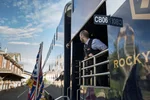
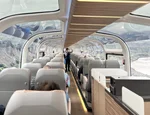
GoldLeaf and SilverLeaf Services on the First Passage to the West Route differ in train coach design, dining style, viewing access, and level of service. GoldLeaf service takes place in a bi-level glass-dome coach with upper-level seating that provides panoramic views of the Canadian Rockies. SilverLeaf service operates in a single-level dome coach with oversized windows that give clear and expansive scenic views. GoldLeaf passengers dine in a dedicated lower-level dining room with gourmet à la carte meals prepared by executive chefs. SilverLeaf passengers enjoy freshly prepared meals served at their seats with a simpler but high-quality menu. GoldLeaf offers an exclusive open-air viewing platform for photography and fresh-air viewing. SilverLeaf features a smaller shared outdoor area between coaches.
The difference between GoldLeaf vs SilverLeaf extends to personal service and comfort. GoldLeaf has a higher staff-to-guest ratio, providing more personalized attention throughout the trip, and includes upgraded hotel accommodations at overnight stops for GoldLeaf passengers. SilverLeaf offers attentive service with fewer hosts and standard hotel rooms in Kamloops. GoldLeaf and SilverLeaf services are available on the two-day daylight-only journey through mountain scenery, and include unlimited alcoholic and non-alcoholic beverages and live storytelling from onboard hosts. The main contrast comes down to GoldLeaf’s spacious bi-level design, premium dining, and improved open-air access versus SilverLeaf’s more intimate, single-level layout and relaxed in-seat dining experience.
GoldLeaf offers the best platform for photography
For photography lovers, I recommend GoldLeaf service. The larger outdoor platform allows more space for capturing fresh-air shots of mountains and canyons.
Susan TomihiroVice President of Product
The first class Rocky Mountaineer train cabin is GoldLeaf Service, which is the highest level of comfort and luxury on board. GoldLeaf passengers ride in the upper level of a bi-level glass-dome coach, where spacious, reclining seats provide generous legroom and rotate 180 degrees, allowing small groups to face each other. The full glass-dome windows curve overhead, giving clear panoramic views of mountains, rivers, and forests along the route while blocking UV rays. The seating layout creates a relaxed and social atmosphere while keeping every passenger close to the scenery.
The first class Rocky Mountaineer train experience on routes like the Rocky Mountaineer first passage to the west includes premium amenities. GoldLeaf passengers enjoy freshly prepared gourmet breakfasts and lunches served in the elegant lower-level dining room, unlimited alcoholic and non-alcoholic beverages, snacks throughout the day, and access to a large outdoor viewing platform for fresh-air photography. A team of up to four onboard hosts offers personalized service, shares stories about landmarks, and points out wildlife along the way. The combination of elevated views, fine dining, attentive staff, and open-air access makes GoldLeaf the most luxurious way to travel through the Canadian Rockies.
Yes, the Rocky Mountaineer Train from Vancouver to Banff includes meals in GoldLeaf and SilverLeaf service levels. The Rocky Mountaineer train operates only during daylight hours, which allows passengers to enjoy breakfast and lunch each day while travelling. GoldLeaf passengers dine in a dedicated lower-level dining room inside the bi-level glass-dome coach. SilverLeaf passengers have their meals served at their seats in a single-level glass-dome coach.
The Rocky Mountaineer’s onboard chefs prepare gourmet dishes using seasonal ingredients sourced from regions along the route, including fresh British Columbia salmon and Alberta beef. Snacks, alcoholic drinks, and non-alcoholic beverages are included in GoldLeaf and SilverLeaf services throughout the journey. The two-day trip includes an overnight hotel stay in Kamloops, with all meals and service focused on improving the luxury travel experience through the Canadian Rockies.
Yes, Rocky Mountaineer GoldLeaf seating is available for the route to Lake Louise. The train runs the First Passage to the West route between Vancouver and Lake Louise or Banff, giving passengers the choice between GoldLeaf and SilverLeaf service for the entire journey. GoldLeaf offers a bi-level glass-dome coach with spacious reclining seats on the upper level and gourmet meals in a separate dining room on the lower level. SilverLeaf provides a single-level glass-dome coach with oversized windows and meals served at the seat.
The Vancouver to Lake Louise train covers two days of daylight travel through the Canadian Rockies, with an overnight hotel stay in Kamloops, British Columbia. The route operates in reverse from Lake Louise to Vancouver, offering the same service levels and amenities in either direction. GoldLeaf and SilverLeaf include snacks, alcoholic drinks, non-alcoholic beverages, and commentary from onboard hosts, making the journey from Vancouver to Lake Louise, or Lake Louise to Vancouver, a luxury travel experience focused on comfort, scenery, and fine dining.
No, there are no Rocky Mountaineer sleeper cars on the journey from Vancouver to Calgary or any other route. The Rocky Mountaineer operates as a daylight-only luxury train, meaning all travel takes place during the day, allowing passengers to see every part of the scenery. Overnight accommodations are provided in comfortable hotels at scheduled stops such as Kamloops, British Columbia, instead of sleeping on the train, allowing passengers to avoid travelling through the Canadian Rockies at night and missing key sights.
There is no sleeper train Vancouver to Banff, so travellers looking for this type of experience would need to choose a different rail service, such as VIA Rail’s “The Canadian,” which offers private cabins and Prestige class sleeper accommodations on its multi-day cross-country route from Vancouver to Jasper and Toronto. The Rocky Mountaineer focuses instead on panoramic viewing through large dome windows, gourmet meals served onboard, and hotel stays that allow guests to rest fully before continuing their journey the following morning.
Stations that are part of the Rocky Mountaineer Vancouver to Banff Journey are listed below.
The Vancouver to Banff train on the Rocky Mountaineer usually departs at 8:00 a.m. Pacific Time on the first day of the two-day journey. Passengers board at the Vancouver Station before travelling toward Kamloops for the overnight stop. The second day begins at 6:50 a.m. Pacific Time departure from Kamloops, with the train arriving in Banff between 8:00 p.m. and 9:30 p.m. Mountain Time. The Rocky Mountaineer operates the Vancouver to Banff route from April to October, with departures on Mondays and Fridays, plus additional Tuesday departures during select months, according to the Rocky Mountaineer Schedule. Passengers are advised to arrive at the Vancouver Station at least 45 minutes before departure to allow time for check-in and boarding.
No, there is no train from Vancouver to Banff daily. The Rocky Mountaineer runs the Vancouver to Banff route on Mondays and Fridays between mid-April and mid-October, with extra Tuesday departures from early May to late September. The train operates only two to three days per week during the season, not every day. The Rocky Mountaineer is designed as a luxury daylight sightseeing train, which means the schedule is planned to give passengers the best views and coordinated hotel stays in Kamloops.
The 2026 eastbound season operates from April 17 to October 9, following the Monday, Tuesday, and Friday departure pattern. Passengers must plan their trips around these set dates, as the Rocky Mountaineer does not function as a daily transportation service. The limited schedule helps maintain the premium experience, including glass-dome coaches, gourmet dining, and personalized onboard service.

Useful Links
Canadian Train Trip FinderRocky Mountaineer Train ToursRocky Mountaineer Train PriceRocky Mountaineer Train RoutesRocky Mountaineer 2026 ScheduleFirst Passage to the West Journey Through the Clouds RouteRainforest to Goldrush RoutePassage to the Peaks RouteTravel Guides
Canadian Rockies Travel GuideBanff National Park Travel GuideJasper National Park Travel GuideLake Louise Travel GuideCalgary Travel GuidePopular Train Trips
Jasper and Banff Extended GetawayVancouver and Banff Extended Getaway Circle the Rockies Extended GetawayVancouver and Lake Louise Extended GetawayRockies Sleeper-Train Extended GetawayRockies Train Extended Getaway with Self-DriveCanadian Rockies Trains
About Us© 2026 Fresh Tracks Canada


.jpg?auto=webp&format=webp&width=150&max_age=31536000)