Rainforest to Gold Rush: Rocky Mountaineer Vancouver to Whistler Train

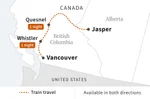
Rainforest to Gold Rush is a Rocky Mountaineer train journey, available from April to October with departures every Saturday from Vancouver and Tuesday returns from Jasper. As part of this journey, passengers take the train from Vancouver to Whistler and then follow the historic Cariboo Gold Rush trail from the 1860s, connecting coastal British Columbia to the Rocky Mountain wilderness. The Vancouver to Whistler train continues on to Quesnel and then Jasper, travelling 1,153 kilometers (717 miles) through geographical zones, including temperate rainforests, the desert-like Fraser Canyon, ranch country, and alpine mountain ranges. The route includes overnight stops at Whistler and Quesnel before reaching Jasper National Park, the largest park in the Canadian Rockies.
 
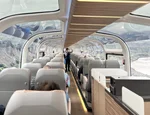
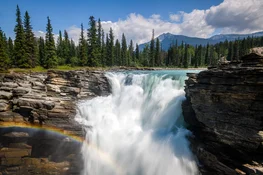
The Rocky Mountaineer Vancouver to Whistler experience provides passengers with views from glass-domed coaches while travelling through some of Canada's most scenic areas. Travellers expect to see granite cliffs, waterfalls, coastal rainforests, and wildlife, including black bears, bald eagles, and osprey, throughout the journey. The train Vancouver to Whistler segment features GoldLeaf and SilverLeaf service levels with gourmet meals, onboard hosts sharing regional stories, and outdoor viewing platforms for photography opportunities. Passengers spend their first night in hotel accommodations in Whistler before continuing to Quesnel the following day, then completing the journey to Jasper National Park on the third day of the Canadian Rockies rail adventure.

Best-selling Train Trips

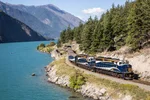
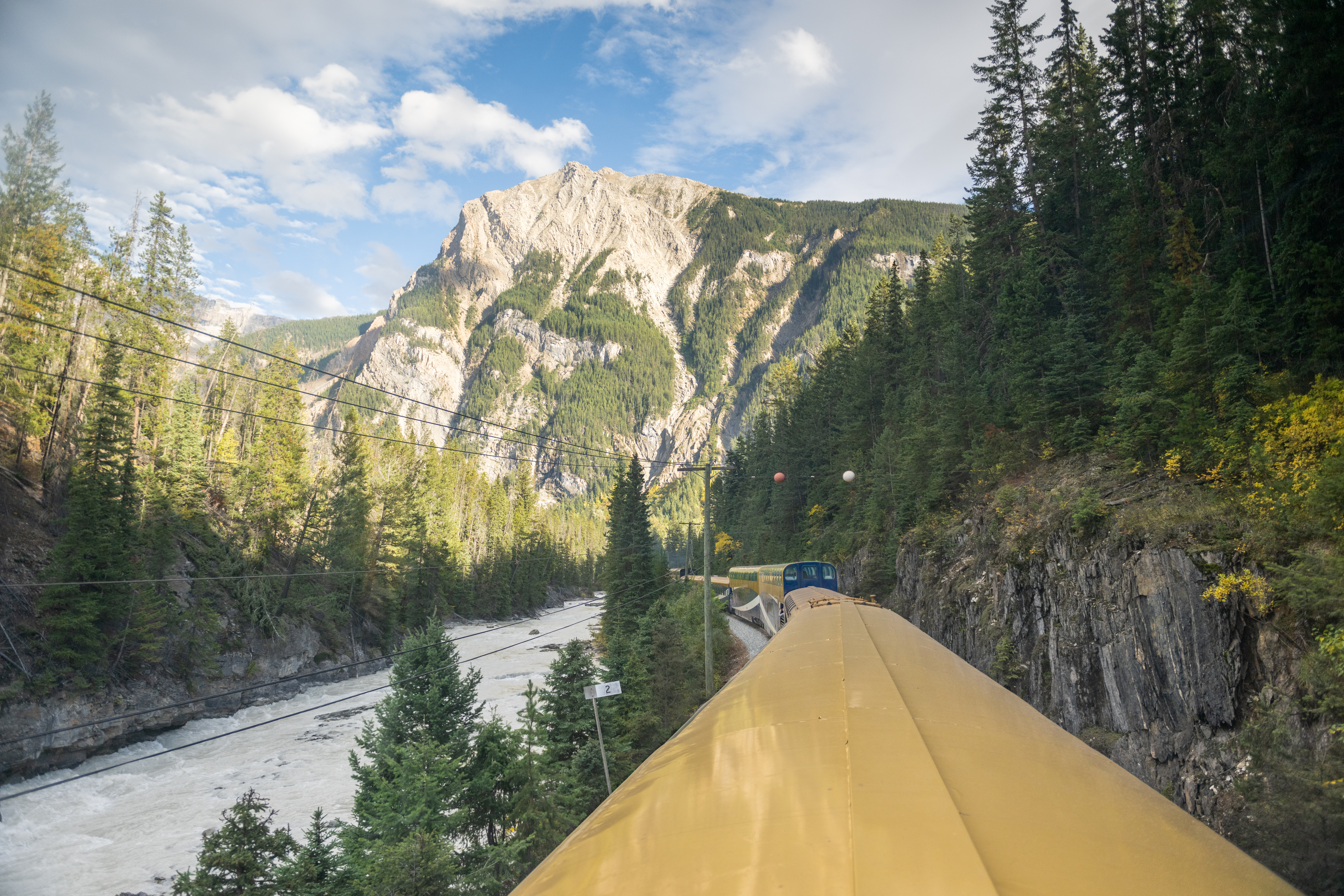
The Rocky Mountaineer rounds the bend alongside the azure waters of Seton Lake, BC.

What is Rainforest to Gold Rush?

The Rainforest to Gold Rush is a three-day train route that runs between Vancouver, British Columbia, and Jasper, Alberta. The Rocky Mountaineer train travels over 1,153 kilometres, starting in Vancouver and making overnight stops in Whistler and Quesnel before reaching its final destination in Jasper. The train operates in daylight hours only, with passengers staying in hotels each night along the route.
 
The Rocky Mountaineer Jasper route follows parts of the historic Cariboo Gold Rush trail from the 1860s. The journey takes travellers from coastal forests near Vancouver, through Whistler to Jasper mountain valleys, past ranch country near Quesnel to Jasper, and into the Rocky Mountain wilderness. The service runs from April to October, giving passengers access to remote areas. The Vancouver to  Jasper train ride ends in Jasper National Park and isa popular Canadian Rockies Train journey through western Canada's diverse landscapes, from coast to mountains.
RMR Rainforest to Gold Rush

What is the Rainforest to Gold Rush Train Journey Like?

The Rainforest to Gold Rush Train Journey is like a trip through some of the most beautiful parts of British Columbia. The train moves along the Sea-to-Sky Corridor, starting in Vancouver, with views of Howe Sound and the Coast Mountains. Travellers pass through coastal rainforests, where tall trees and thick moss create a rich, green environment. The journey takes them through Fraser Canyon, where the land turns into a dry, desert-like area with cliffs and sparse plants. The train heads into the Rocky Mountains, with tall peaks, clear lakes, and alpine meadows.
 
The 3-day Rocky Mountaineer journey spans over 1,150 kilometres (700 miles), with passengers riding in GoldLeaf coaches that offer clear views of the changing scenery. Guests enjoy meals based on local flavours and hear stories about the area's history and wildlife. The train ride focuses on daylight hours, and travellers take in the incredible views. Wildlife (black bears, bald eagles, and osprey) are often seen on the trip. The route provides natural beauty and cultural history, making it a memorable experience.

Expect quick-changing scenery between Vancouver and Whistler

The Vancouver to Whistler segment is packed with photo-worthy views — fjords, cliffs, waterfalls, and Coast Mountains. We recommend having your camera ready; the scenery shifts quickly along the Sea-to-Sky corridor.

Elléa Moreau
Manager of Product Operations

How long is the Rocky Mountaineer Vancouver to Jasper Ride?

The Rocky Mountaineer Vancouver to Jasper ride takes two or three full days of train travel. The Rainforest to Gold Rush route requires two overnight hotel stays in Whistler and Quesnel, making it different from Rocky Mountaineer's standard two-day routes. The Journey through the Clouds route covers the Vancouver-Jasper corridor in two days of all-daylight rail travel, while the three-day Rainforest to Gold Rush route takes a northern routing through additional territory. The extended three-day itinerary allows passengers to travel through more varied terrain and experience a broader range of British Columbia's landscapes. 
 
Railway passengers appreciate the longer route because it follows historic gold rush trails and provides access to remote wilderness areas. The Rainforest to Gold Rush represents one of four distinct rail routes through the Rockies offered by Rocky Mountaineer, designed for travellers. The overnight stays mean passengers spend more time on the train, travel further, and can rest each evening, with comfortable hotel accommodations included at Whistler and Quesnel. Rocky Mountaineer designed the three-day route to maximize daylight viewing opportunities, maintaining the company's signature all-daylight travel policy, ensuring passengers never miss highlights due to darkness.

What is the Best Time to Take the Rainforest to Gold Rush?

The Best Time to take the Rainforest to Gold Rush is in the operating season, which runs from mid-April to mid-October. Rocky Mountaineer operates through three seasons, with spring, summer and fall all being periods for the northern route. The first departures of the season for Rainforest to Gold Rush are in late April and throughout May, offering excellent wildlife viewing and spring scenery. Summer months provide extended daylight hours, allowing passengers to enjoy maximum visibility of the wilderness between Vancouver and Jasper. The warmer weather makes for comfortable viewing from the train's outdoor viewing platforms and glass-domed coaches.
 
Fall represents one of the most spectacular times to experience the Rainforest to Gold Rush route, as autumn brings seasonal beauty to the terrain. The forests around Whistler and through the Cariboo region display yellow and orange flora, creating contrasts against the evergreen trees. September and early October offer ideal conditions with clear skies and moderate temperatures. Passengers find the Best Time for Canadian Rockies train journeys is between late June and early October, when weather conditions remain stable and visibility reaches its peak.

How to Book the Rocky Mountaineer Train Rainforest to Gold Rush?

To book the Rocky Mountaineer Train Rainforest to Gold Rush, follow the ten steps listed below.
 
  1. Visit the Official Website. Explore the Canadian Rockies Trains website and locate the Rainforest to Gold Rush route under train routes. The website provides package search functionality for booking train travel.
  2. Choose Package Type. Select between rail-only packages or complete vacation packages that include hotels and additional services. Multiple package options exist, including Night Experience Packages variants with different destinations and durations.
  3. Select Travel Direction. Decide between eastbound (Vancouver to Jasper) or westbound (Jasper to Vancouver) routing. The directions are available with detailed itineraries and pricing for the 2025-2026 seasons.
  4. Pick Service Level. Choose between GoldLeaf and SilverLeaf service classes with different amenities and pricing structures. 
  5. Contact Vacation Consultant. Call 1-844-202-1320 directly or email info@canadianrockiestrains.com for assistance with booking and questions. The Guest Experience Centre operates 7 days a week from 6:00 am to 9:00 pm (PT) in the operating season.
  6. Use a Travel Agent. Book through authorized travel agents who have access to specialized agent portals with booking tools and promotional offers. The Canadian Rockies Trains provide travel advisor services.
  7. Review Terms and Conditions. Read the complete booking terms and conditions before finalizing reservations. Updated terms were last modified on January 27, 2025, for 2026 travel bookings.
  8. Complete Online Check-in. Access the Guest Portal within 7 days of departure to complete check-in requirements. Online check-in through the Guest Portal is mandatory within 7 days of train departure.
  9. Collect Welcome Package. Pick up luggage tags and boarding passes at Guest Centres or designated locations before travel. Welcome Packages must be collected within three days of train departure.
  10. Make Dinner Reservations. Book restaurant reservations in advance for overnight stops in Whistler, Quesnel, and Jasper. Advance dinner reservations are highly recommended for all destination towns.

How much is the Rocky Mountaineer Rainforest to Gold Rush Train Trip?

The Rocky Mountaineer Rainforest to Gold Rush Train Trip costs start from CAD 4,500 to CAD 5,000 per person for the basic rail-only package. The exact price depends on the time of year, with peak travel dates being more expensive than the first departures of the season. 
 
The cost for Rainforest to Gold Rush includes GoldLeaf service, which features bi-level glass dome coaches and gourmet dining prepared by executive chefs. SilverLeaf, which offers single-level coaches with large windows and in-seat dining, is not available on this Rocky Mountaineer route. Peak season travel in the summer months commands higher rates than shoulder season departures in April, May, and October. The Vancouver to Whistler train day trip segment represents just one portion of the complete three-day journey pricing structure. The rail-only route package pricing includes the train journey, two hotel nights along the way, meals onboard, and transfers, making it a comprehensive travel experience. Travellers seeking accurate quotes must contact the travel experts at Canadian Rockies Trains as Rocky Mountaineer Prices can fluctuate throughout the booking season based on demand and availability factors.

How do GoldLeaf and SilverLeaf Services differ on the Rainforest to Gold Rush Route?

GoldLeaf is the only service level available on the Rainforest to Gold Rush Route. GoldLeaf includes travel in a bi-level glass-dome coach, seating passengers underneath a wrap-around glass dome that allows views of the sky right from their seats. The GoldLeaf Service features gourmet meals served in a separate dining room, prepared by Executive Chefs. While not available on this Rocky Mountaineer route, SilverLeaf operates with single-level glass-dome coaches where meals are served directly at passenger seats. GoldLeaf includes a large open-air platform where passengers step outside for fresh air and enjoy photography opportunities, compared to SilverLeaf's smaller outdoor viewing area.
 
The service levels provide different hospitality experiences beyond the physical coach differences. GoldLeaf features additional onboard hosts who entertain passengers with regional stories and serve unlimited drinks from the bar, including cocktails, local wines, and beers. SilverLeaf maintains quality service with onboard hosts delivering meals to seats, though passengers experience a more intimate atmosphere with raised glass windows providing excellent visibility. The cost difference between services is CAD 900-1200 per person on Rocky Mountaineer’s First Passage to the West and Journey Through the Clouds routes, depending on travel dates, and choosing between GoldLeaf vs SilverLeaf is a decision based on budget preferences and desired level of luxury amenities.

What does the Rocky Mountaineer Vancouver to Whistler Route Include?

The Rocky Mountaineer Vancouver to Whistler Route includes travel in a glass-dome train coach as part of the three-day Rainforest to Gold Rush journey, featuring views of Howe Sound and the Coast Mountains. The travel represents the first day of the luxurious 3-day journey onboard Rocky Mountaineer between Vancouver and Jasper. The train departs Vancouver and travels north along the coastal corridor, providing passengers with views of the beautiful  Howe Sound fjords. The route takes passengers from Vancouver up into the Coast Mountains, showcasing the transition from urban coastal to wilderness.
 
The Rocky Mountaineer Vancouver to Whistler segment covers 119 kilometers (74 miles) of railway through British Columbia's Sea-to-Sky corridor. Passengers experience views of granite cliffs, waterfalls, and coastal rainforests as the train climbs toward Whistler. All Rocky Mountaineer guests receive complimentary motorcoach transfers to and from the train at Whistler, where they spend their first overnight stop before continuing to Quesnel the following day. The Howe Sound section en route to Whistler represents one of the most photographed portions of the journey, making the segment a highlight of the complete Rocky Mountaineer Train Route through western Canada's geographical regions.

Make time for both the dome and platform viewpoints

This is Rocky Mountaineer’s most diverse route, moving through rainforest, canyon desert, ranchlands, and alpine peaks. I would make time for both the dome and outdoor platform to enjoy each landscape’s unique character.

Elléa Moreau
Manager of Product Operations

What is the Most Scenic Route on the Rocky Mountaineer?

The Rocky Mountaineer Vancouver to Whistler Route includes travel in a glass-dome train coach as part of the three-day Rainforest to Gold Rush journey, featuring views of Howe Sound and the Coast Mountains. The travel represents the first day of the luxurious 3-day journey onboard Rocky Mountaineer between Vancouver and Jasper. The train departs Vancouver and travels north along the coastal corridor, providing passengers with views of the beautiful  Howe Sound fjords. The route takes passengers from Vancouver up into the Coast Mountains, showcasing the transition from urban coastal to wilderness.
 
The Rocky Mountaineer Vancouver to Whistler segment covers 119 kilometers (74 miles) of railway through British Columbia's Sea-to-Sky corridor. Passengers experience views of granite cliffs, waterfalls, and coastal rainforests as the train climbs toward Whistler. All Rocky Mountaineer guests receive complimentary motorcoach transfers to and from the train at Whistler, where they spend their first overnight stop before continuing to Quesnel the following day. The Howe Sound section en route to Whistler represents one of the most photographed portions of the journey, making the segment a highlight of the complete Rocky Mountaineer Train Route through western Canada's geographical regions.

What Train Goes from Vancouver to Whistler?

The Train Goes from Vancouver to Whistler on Rocky Mountaineer's Rainforest to Gold Rush route. Rocky Mountaineer operates the primary passenger rail service between Vancouver and Whistler, and this is one section of a 3-day train journey from Vancouver to Jasper. The train operator provides the only scheduled passenger train service connecting Vancouver directly to Whistler via railway infrastructure. Rocky Mountaineer's Rainforest to Gold Rush route departs Vancouver for Jasper via Whistler each Saturday from mid-April to mid-October, with westbound service departing Jasper for Vancouver via Whistler each Tuesday. The three-day Rainforest to Gold Rush journey is Rocky Mountaineer’s longest route and includes overnight stops in Whistler and Quesnel before reaching Jasper.
 
The railway infrastructure follows the former Pacific Great Eastern Railway (PGE) line, whose construction started in 1885 and reached full completion in 1952. Train operations include stops at Pemberton Train Station, with complimentary motorcoach transfers provided between the Pemberton platform and Whistler accommodations. The Vancouver to Whistler segment covers 119 kilometres (74 miles) of mountainous railway through British Columbia's coastal mountain range. VIA Rail operates passenger train service in western Canada, but does not provide direct Vancouver to Whistler routing. Rocky Mountaineer maintains exclusivity for passenger rail service between Vancouver and Whistler through specialized luxury tourism train operations.
 
Is there a train from Vancouver to Whistler? Yes, there is a train from Vancouver to Whistler. The Rocky Mountaineer runs a scenic 3-day route that takes passengers through mountains and forests. It is a comfortable way to travel, with great views along the way. Passengers stop at Whistler overnight before continuing to Quesnel and Jasper.

Host commentary brings the route’s history to life

One of my favourite parts of this route is listening to the onboard hosts share stories about early settlers, wildlife, and the landscapes you’re travelling through. Their commentary adds depth to the journey, and they’re always happy to answer questions along the way.

Susan Tomihiro
Vice President of Product

What Stations does the Rocky Mountaineer Train Route Pass Through?

The stations that the Rocky Mountaineer Train Route Passes Through are listed below.
 

  1. Vancouver Starting Point: Vancouver serves as the departure terminal, with the Rocky Mountaineer Vancouver station being the starting point for eastbound Rainforest to Gold Rush journeys. The coastal city represents the beginning of the three-day railway adventure through British Columbia and Alberta. Passengers board at Vancouver each Saturday morning from April to October for the luxury train experience.
  2. Whistler Overnight Stop: Whistler functions as the first overnight accommodation stop, where the Whistler train station at Pemberton provides arrival services with complimentary transfers to Whistler Village hotels. The mountain resort destination offers passengers their first night of hotel accommodations between train travel days. Whistler represents the transition from coastal terrain to mountain wilderness along the railway corridor.
  3. Quesnel Overnight Stop: Quesnel operates as the second overnight hotel stop where the Rocky Mountaineer station serves passengers travelling through British Columbia's historic Cariboo region. The ranch country location provides overnight accommodations before the final day of train travel into Alberta. Quesnel represents the gold rush territory portion of the railway journey through northern British Columbia.
  4. Jasper Final Destination: Jasper serves as the terminus station where passengers complete their three-day Rainforest to Gold Rush railway journey in Jasper National Park. The mountain town is the final destination for eastbound travellers experiencing the Canadian Rockies wilderness. Jasper provides the concluding point for passengers before beginning their stay in the Rocky Mountain National Park system.

Use your overnights to explore Whistler and Quesnel

Rainforest to Gold Rush is a longer route with overnights in Whistler and Quesnel. I suggest using these evenings to stretch your legs, explore the towns, and rest before another full day of scenery. The slower pace is part of what makes this journey so rewarding.

Headshot of a person smiling
Kirsten McNabb
Product Specialist

Can the Rocky Mountaineer Rainforest to Gold Rush Route Map be Downloaded Online?

Yes, the Rocky Mountaineer Rainforest to Gold Rush Route Map can be downloaded online through multiple official channels. Rocky Mountaineer train route map downloads are available via the company's official website at canadianrockiestrains.com through their brochure download section. The Rocky Mountaineer train map appears in PDF brochures that include detailed route information, station locations, and geographical features for all four distinct rail routes, including the Rainforest to Gold Rush service between Vancouver, Whistler, Quesnel, and Jasper. Rocky Mountaineer provides route maps in their brochures and on their official website for trip planning purposes. The downloadable materials include the 2025 Rocky Mountaineer sales brochure available through the Issuu digital publishing platform, featuring route maps for Canadian Rockies services. 
 
Travel agents access specialized brochures through the RM Portal agent system, which includes full brochures and mini brochures with route mapping for client consultation. The official website maintains downloadable e-brochures under the "Order Brochure" section, where passengers obtain detailed route maps for the Rainforest to Gold Rush journey alongside other Rocky Mountaineer services. Digital route maps show station stops, geographical landmarks, overnight accommodation locations, and highlights between Vancouver and Jasper via the northern routing through Whistler and Quesnel. 

What is the difference between the Gold Rush Classic and Rainforest to Rockies Itineraries?

The difference between the Gold Rush Classic and Rainforest to Rockies Itineraries is duration and scope. The Gold Rush Classic is a Rocky Mountaineer itinerary that has the core 3-day rail journey aboard the Rocky Mountaineer from Vancouver to Jasper via Whistler and Quesnel, focusing on the luxury train experience with overnight hotel stays. The gold rush routes include the classic rail-only package and vacation packages that have train travel with additional activities. The Gold Rush Classic provides passengers with the pure railway experience through the historic Cariboo Gold Rush territory, featuring overnight stops in Whistler and Quesnel before reaching Jasper National Park. This is one of Rocky Mountaineer’s own packages. 
 
There is no itinerary called Rainforest to Rockies, but there are longer Rocky Mountaineer tour packages that include the rail journey plus other activities beyond the core train experience. Extended packages (like the West Coast and Rockies Getaway) can incorporate additional sightseeing by motorcoach, extended stays in destinations (Jasper), and Western Canada touring beyond the basic train itinerary. The longer tour packages build upon the foundation of the core 3-day train journey, adding pre- and post-rail activities that expand the vacation experience from a simple train ride into a comprehensive Canadian Rockies exploration. Extended packages include additional overnight stays in mountain destinations and motorcoach tours that connect multiple Canadian Rockies locations beyond the train route terminals.

How does the Rocky Mountaineer Rainforest to Gold Rush Itinerary Change by Season?

The Rocky Mountaineer Rainforest to Gold Rush itinerary changes by season through the same three-day route from Vancouver to Jasper via Whistler and Quesnel. The train schedule and overnight stops stay the same from April to October, but the scenery looks different depending on when passengers travel. Spring trips show snow-covered mountain tops with new green plants growing in the coastal forests. Summer journeys showcase lush rainforest with thick green vegetation and have longer daylight hours.
 
The route stays the same, but the landscapes change from season to season, giving passengers different photo opportunities and weather conditions. Spring months (April to May) feature snow-capped peaks and rushing waterfalls, while summer is the best time to see turquoise lakes in the Rockies, and the fall months are great for viewing wildlife and golden foliage. The Canadian Rockies become spectacular when autumn arrives, with the Whistler and Quesnel regions showing fall colours that stand out against the snow-covered mountain peaks. Passengers see different weather patterns as they travel through each area, with temperature changes affecting what clothes to pack and when wildlife appears throughout the operating season.