Jasper and Banff Extended Getaway
Calgary→Banff→Jasper→Kamloops→Vancouver
Available: April – October
Length: 8 days / 7 nights
Train type: Rocky Mountaineer
Time on train: 2 days
Loading...
Passage to the Peaks is a new luxury rail experience that offers an alternative to the Rocky Mountaineer routes, connecting Banff, Jasper, and Kamloops through Canada’s most iconic mountains. The two-day journey highlights glacier-fed rivers, alpine passes, and national parks (Banff and Jasper), used for travellers seeking views and relaxed pacing.
Passage to the Peaks focuses exclusively on the heart of the Canadian Rockies, unlike other rail tours, with dome-view coaches, onboard hosts, and curated commentary. Travellers begin in Banff or Jasper and enjoy an overnight stay in Kamloops before continuing through terrain such as Mount Robson and Pyramid Falls. The route offers a way to experience Canada’s mountain heritage for guests drawn to the peaks and looking beyond the Rocky Mountaineer first passage to the west.
Rocky Mountaineer's Passage to the Peaks route between Banff and Jasper was a limited-time route that operated in June and July 2026. It will not be available in 2027. Instead, travellers can experience the First Passage to the West or Journey Through the Clouds routes.
Calgary→Banff→Jasper→Kamloops→Vancouver

Vancouver→Kamloops→Jasper→Banff→Kamloops→Vancouver
Jasper→Kamloops→Vancouver
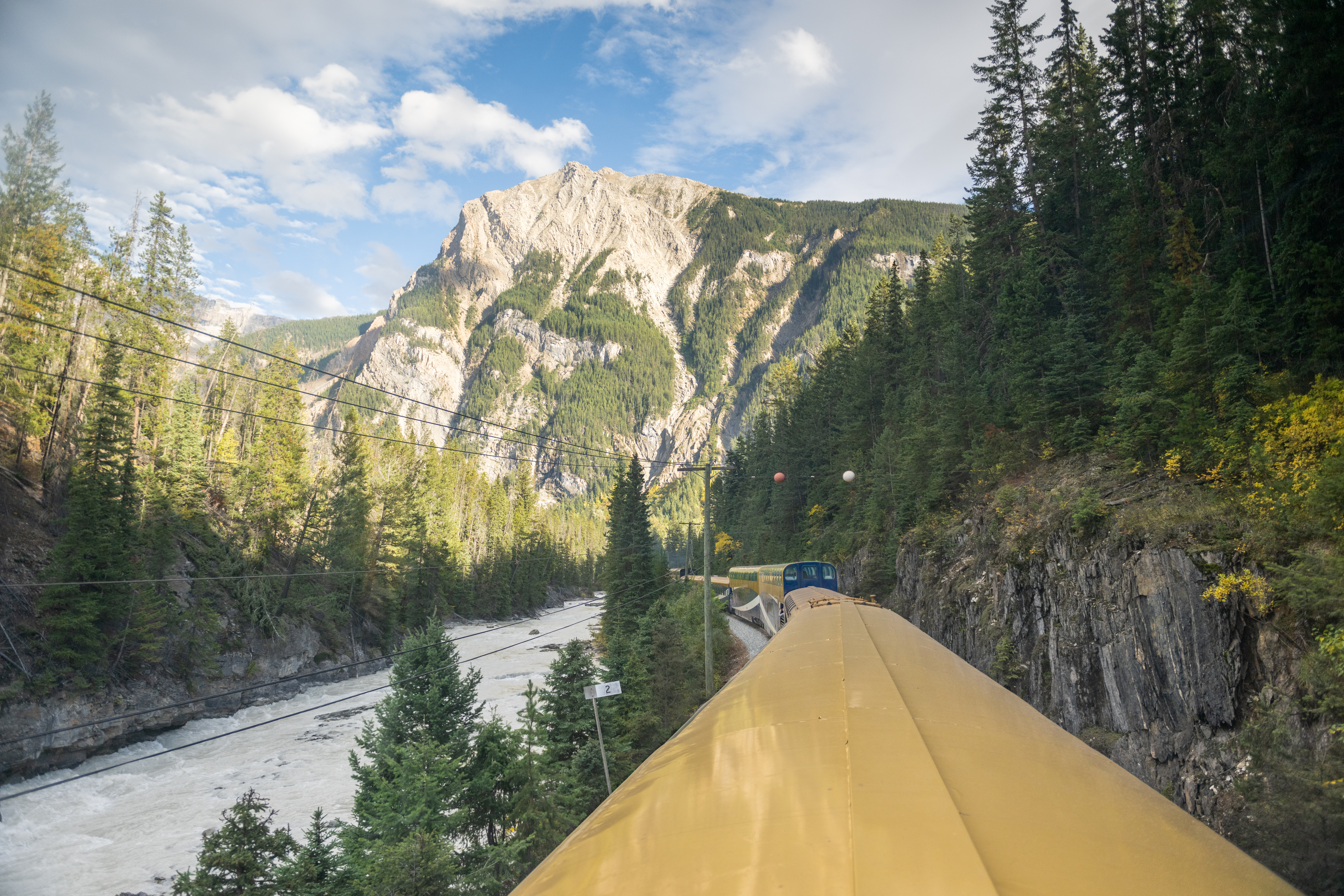
The Passage to the Peaks train route is a two-day luxury rail journey operated by Rocky Mountaineer between Jasper and Banff. The passage runs through the Canadian Rockies, highlighting alpine terrain, glacier-fed rivers, and protected national parks. The route includes an overnight stay in Kamloops and features panoramic views of Mount Robson, Pyramid Falls, and the Spiral Tunnels.
The route bypasses coastal scenery to focus on geological formations (Castle Mountain and Yellowhead Pass), positioned within Rocky Mountaineer’s inland collection. Dome coaches and open-air platforms support uninterrupted views of UNESCO-listed sites, including Banff and Jasper National Parks. The itinerary integrates with multi-day packages that feature guided excursions to Lake Louise, Columbia Icefield, and Maligne Canyon.
Reserve early for the best dates and service levels
Passage to the Peaks is available only in June and July 2026, making it the most time-restricted route in Rocky Mountaineer’s portfolio. With limited departures and high demand for Banff and Jasper travel, I suggest booking early to ensure the best choice of dates, hotels, and service levels.
Elléa MoreauManager of Product Operations
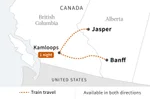
The passage to the peaks journey starts at Banff and ends at Jasper, or vice versa, depending on direction. The Passage to the Peaks is a two-day luxury rail journey running exclusively between Banff and Jasper in Alberta. Travellers select an eastbound or westbound direction, with options offering identical sightseeing highlights. The route includes an overnight hotel stay in Kamloops, British Columbia, a quiet town nestled between the Thompson River and surrounding hills. The train passes through Castle Mountain, Rogers Pass, Pyramid Falls, Mount Robson, and the Spiral Tunnels, each chosen for geological and alpine beauty.
The route bypasses coastal scenery to focus on protected wilderness and alpine terrain, positioned within Rocky Mountaineer’s inland collection. Dome coaches and open-air platforms support uninterrupted views of UNESCO-listed sites, including Banff and Jasper National Parks. The itinerary integrates with multi-day packages that feature guided excursions to Lake Louise, Columbia Icefield, and Maligne Canyon. The journey’s direction, whether departing from Banff or Jasper, determines the sequence of landmarks but preserves the full scope of Western Canada’s interior show.
The passage to the peak's journey starts and ends as shown in the image below.
The things that make Passage to the Peaks different from other Rocky Mountaineer Routes are its exclusive inland focus, limited seasonal schedule, and direct connection between Banff and Jasper without passing through Vancouver. Passage to the Peaks remains entirely within the Canadian Rockies, unlike the First Passage to the West, which includes coastal scenery and urban stops. It highlights geological landmarks such as Mount Robson, Castle Mountain, and Pyramid Falls, and passes through protected wilderness areas (Rogers Pass and Yellowhead Pass).
The route between Banff and Jasper includes an overnight hotel stay in Kamloops, but avoids major cities and coastal terrain. Its panoramic coaches and open-air platforms are for uninterrupted alpine viewing, with no urban distractions. The journey is available only in June and July 2026, making it the most time-restricted route in Rocky Mountaineer’s portfolio. It is tailored for travellers seeking geological immersion and UNESCO-listed landscapes, rather than coastal contrast or urban excursions. Landmark highlights and itinerary details for complete departure options, refer to the Train Route Schedule for planning.
The Passage to the Peaks will be available to travellers when the route opens for departures in June 2026, with service limited to select dates through July 2026. The two-day rail journey between Banff and Jasper is part of a seasonal offering focused entirely on the Canadian Rockies. It bypasses coastal cities and urban centres, emphasizing alpine terrain, glacier-fed rivers, and geological landmarks (Mount Robson, Castle Mountain, and Pyramid Falls). The itinerary includes an overnight hotel stay in Kamloops, with eastbound and westbound options available.
Early booking is strongly recommended due to its short operating window and limited seat availability. Travellers seeking panoramic views, UNESCO-listed parks, and curated access to remote wilderness are encouraged to reserve 1 to 2 months in advance through official booking platforms.
The Scenic Highlights that you can see on the Passage to the Peaks are listed below.
The Passage to the Peaks Tour takes 2 days and 1 night, with a scheduled overnight hotel stay in Kamloops, British Columbia. The journey begins in Banff or Jasper, depending on the selected direction, eastbound or westbound. Travellers board the train in the morning and travel through alpine terrain, glacier-fed rivers, and forested valleys before arriving in Kamloops by late afternoon, on Day 1.
Guests disembark for a hotel stay arranged as part of the package, allowing for rest and local exploration. The train resumes its route through Rogers Pass, Pyramid Falls, and Mount Robson, concluding in Jasper or Banff by evening on Day 2. The tour is for sightseeing with coaches and open-air platforms. Meals are served onboard, and hosts provide commentary on geological landmarks and historical features. The rhythm of the itinerary balances travel with curated comfort, making the two-day format ideal for travellers seeking focused access to the Canadian Rockies without extending into coastal regions
The Cities and Landmarks that are included in the Passage to the Peaks Itinerary are listed below.
The Onboard Services that are offered on the Passage to the Peaks Train are GoldLeaf and SilverLeaf service classes, each designed to provide views, gourmet meals, and attentive staff care throughout the journey. GoldLeaf Service features bi-level glass-dome coaches with reserved seating on the upper level and a dedicated dining area below. Travellers enjoy elegantly plated meals prepared by onboard chefs, complimentary alcoholic and non-alcoholic beverages, and access to an exclusive outdoor viewing platform.
Hosts provide commentary on landmarks, wildlife sightings, and regional history, ensuring a comfortable and informative ride. The seats offer extra legroom and temperature control, improving the luxury experience. SilverLeaf Service offers a more budget-friendly option with single-level dome coaches and gourmet meals served at the seat. Large windows stretch into the ceiling, allowing uninterrupted views of mountains, rivers, and valleys. Complimentary drinks and snacks are available throughout the day, and hosts share stories and assist with onboard needs. The service levels include luggage transfers, pre-assigned seating, and a relaxed travel rhythm focused on sightseeing and comfort.
Yes, you can book the Passage to the Peaks as Part of a Package Tour. The packages include hotel stays in Banff, Jasper, and Kamloops, along with luggage transfers and onboard meals. Some options feature guided excursions to nearby attractions (Lake Louise, Columbia Icefield, and Maligne Canyon), allowing travellers to explore more of the Canadian Rockies before or after the train journey.
Pre- and post-tour add-ons are available, including extra nights in mountain lodges or city hotels, airport transfers, and sightseeing tours. Packages are for convenience for first-time visitors who want an experience. Travellers do not need to worry about booking hotels or arranging transport between stops. Browse the available Train Tours offered through official travel platforms for complete itinerary options and inclusions.
Bring a day bag with all your essentials
We always tell our guests to keep their essentials — layers, sunglasses, medication, and chargers in a small day bag for the first full scenic day before the overnight in Kamloops. With checked luggage delivered directly to the hotel, the whole experience stays smooth and relaxed.
Kirsten McNabbProduct Specialist
The accommodation options that are available during the journey are standard and luxury hotel stays arranged in Kamloops, Banff, and Jasper, with upgrade choices available for select packages. Travellers spend one night in Kamloops as part of the two-day itinerary, where accommodations are pre-arranged and vary from comfortable mid-range hotels to premium lodges depending on the service class selected.
Additional nights in Banff or Jasper are included in package tours, offering stays in well-known properties (mountain resorts, boutique hotels, or national park lodges). The locations provide easy access to sightseeing, dining, and guided excursions. Guests customise their accommodation by choosing upgraded hotel categories or adding extra nights before or after the train journey. Options include lakefront rooms, spa resorts, or heritage-style lodges, depending on availability and budget. Bookings include luggage transfers and are coordinated to match the train’s schedule, ensuring a smooth and restful experience throughout the trip.
Yes, the Passage to the Peaks is suitable for families or groups. The train offers spacious seating, open-air viewing areas, and onboard hosts who provide commentary and assistance throughout the journey. The GoldLeaf and SilverLeaf service classes include meals, drinks, and comfortable seating, making it easy for families to relax and enjoy the scenery together. The calm pace and scenic focus are ideal for multi-generational travellers, including children and seniors.
Group packages include hotel stays, luggage transfers, and optional excursions to nearby attractions (Lake Louise or Maligne Canyon). Discounts apply for larger bookings, and travel agents help customise itineraries to suit group needs. Accessibility features (wide aisles and reserved seating are available upon request). The options make the Passage to the Peaks a convenient and enjoyable choice for shared travel experiences.
Keep your camera out for sudden scenic moments
I always say to travellers not to put their camera away — some of the best views appear suddenly. The train slows for Pyramid Falls and passes directly under Mount Robson’s eastern face, giving you vantage points you simply can’t get by road.
Susan TomihiroVice President of Product
You can Book Tickets for the Passage to the Peaks Train through the official website or by contacting a travel agent directly. Online booking is available via Canadian Rockies Trains, where travellers select service class, travel dates, and package options. The site offers sample itineraries, hotel details, and guided tour add-ons. Travellers call the booking line or email the reservations team for personalised assistance, who are available seven days a week to help plan and confirm trips.
Early booking is strongly recommended due to dynamic pricing, which means fares increase as travel dates fill. Reserving months in advance secures preferred seating, hotel upgrades, and access to limited seasonal departures. Travellers request custom packages that include extra nights, excursions, or transfers. The process is designed to be flexible and traveller-friendly, Whether booking online or through an agent.
The Passage to the Peaks Cost starts at CAD $2,850 per person for the 2-day rail journey in SilverLeaf service with Rocky Mountaineer. Alternatively, a more comprehensive Passage to the Peaks package starts at CAD $3,680. This price includes the two-day train journey between Banff and Jasper, hotel stays in Kamloops and other mountain towns, and train station transfers.
Final pricing depends on service class (GoldLeaf or SilverLeaf), seasonal demand, and custom add-ons (upgraded hotels or extra nights) in Banff or Jasper. Travellers are encouraged to book early to secure preferred dates and access limited excursion slots. The full Train Trip cost breakdown is listed on official booking platforms for guests to compare inclusions and seasonal adjustments.
The best time of year to experience the Passage to the Peaks is June and July, when weather conditions are warm, daylight hours are long, and alpine scenery is at its most vibrant. The months offer clear views of turquoise lakes, wildflower-covered meadows, and snow-capped peaks, making them ideal for photography and outdoor excursions. Wildlife (bears, elk, and mountain goats) are active in the period near Jasper and Banff National Parks.
Summer provides the most consistent travel conditions, with minimal rain and full access to guided tours (Columbia Icefield and Maligne Lake). Early fall (September to October) brings golden foliage, quieter crowds, and cooler temperatures, but some excursions operate on reduced schedules. Travellers who prefer relaxed pacing and autumn colours enjoy the fall experience, but train departures are more limited. Seasonal highlights and weather patterns, but guide booking decisions for tourists planning a Canadian Rockies Train Trip.

Useful Links
Canadian Train Trip FinderRocky Mountaineer Train ToursRocky Mountaineer Train PriceRocky Mountaineer Train RoutesRocky Mountaineer 2026 ScheduleFirst Passage to the West Journey Through the Clouds RouteRainforest to Goldrush RoutePassage to the Peaks RouteTravel Guides
Canadian Rockies Travel GuideBanff National Park Travel GuideJasper National Park Travel GuideLake Louise Travel GuideCalgary Travel GuidePopular Train Trips
Jasper and Banff Extended GetawayVancouver and Banff Extended Getaway Circle the Rockies Extended GetawayVancouver and Lake Louise Extended GetawayRockies Sleeper-Train Extended GetawayRockies Train Extended Getaway with Self-DriveCanadian Rockies Trains
About Us© 2026 Fresh Tracks Canada



.jpg?auto=webp&format=webp&width=150&max_age=31536000)